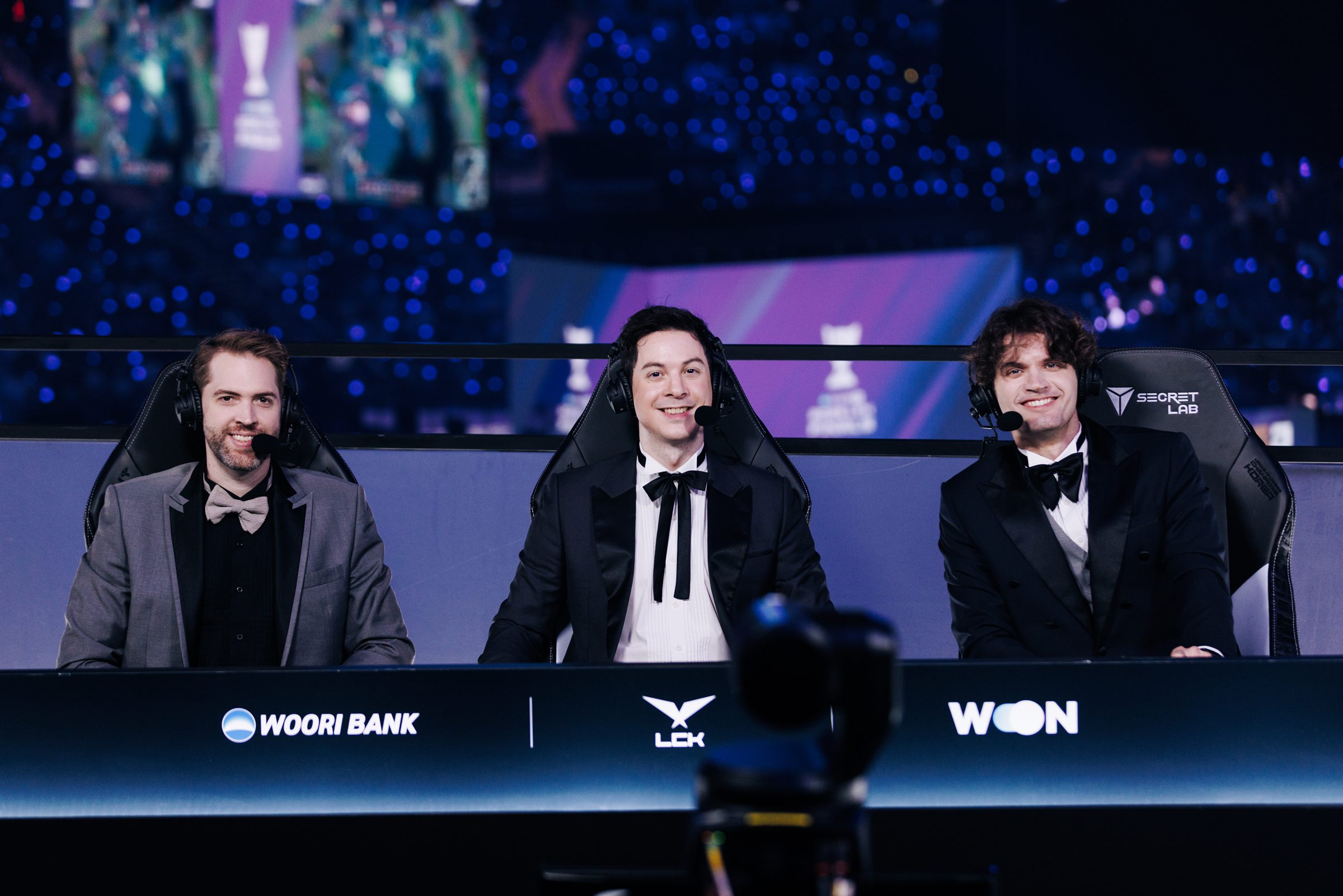
My brand of esports commentary is the collision of emotional storytelling and hard-hitting analysis.
I bring the rich history of Korean esports to a wider global audience.
Current Leagues:LCK Cup 2026PBIC 2026LCK 2026Ymir Cup Season 2EWC LOL 2026KeSPA Cup 2026LCK Cup 2026PBIC 2026LCK 2026Ymir Cup Season 2EWC LOL 2026KeSPA Cup 2026
About
Esports commentary is what I do. Since discovering Korean StarCraft broadcasts in the early 2000s, it has been at the center of my life. After producing and running my own tournament in 2010, I moved to South Korea in 2011 to commentate full time and never looked back.
Today, I primarily work as a freelance LCK commentator. My background is a wide range of titles, from major games like StarCraft and Overwatch to niche titles like KartRider. It is very common for me to cover multiple different titles and tournaments at the same time. I specialize in quickly adapting to new games, finding the key storylines, and making them clear to both core fans and new viewers.
Work
These are the major leagues I've worked on throughout my career. Click any panel to learn more.
Updates
Broadcast notes, career updates, and occasional thoughts on esports and commentary.
Because I receive a heavy volume of email, messages can occasionally be missed or filtered as spam. Please feel free to send a follow-up email, or reach me by social media DM or Discord. I'm available to answer wherever is easiest.
gsl-code-s-2012.jpg
GSL
2011-2016 • Code A, Code S, GSTL Commentator
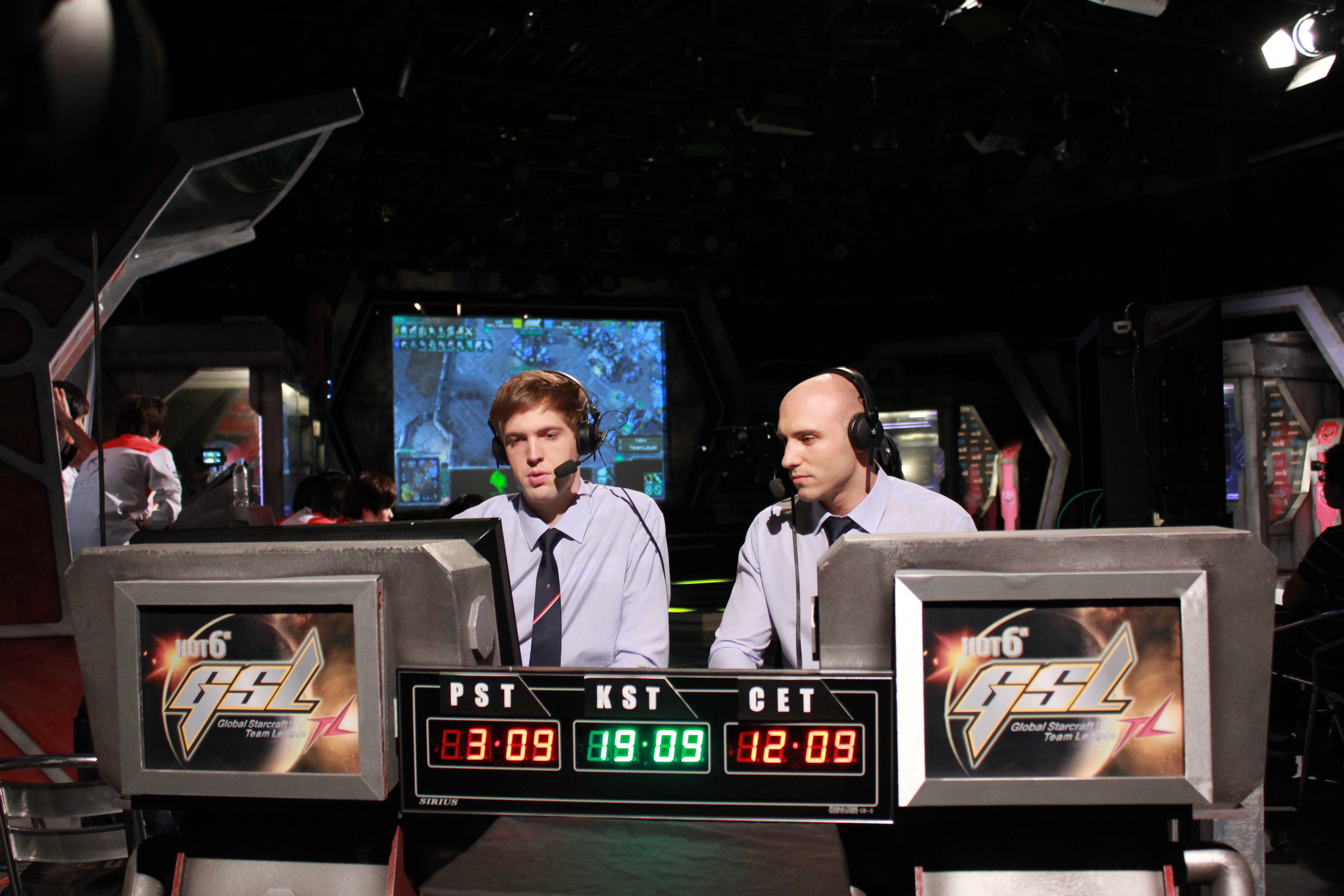
The GSL was the first studio produced league I ever worked on. I dropped out of college, left friends and family behind, and moved to Korea to try to build a career commentating StarCraft II. I was confident I'd find success, but what I didn't know was that this would be the first of many leagues I'd work on over the years.
Following in the footsteps of Nick "Tasteless" Plott and Dan "Artosis" Stemkoski, I tried to build my own brand and style of commentary and humor during the early years of the GSL. I worked with them and other temporary commentators until ultimately finding a main casting partner in Thomas "Khaldor" Kilian. I was just 20 years old when I began my career after two years of online commentary from my apartment in Atlanta.
The GSL to many is one of the first ever massive esports tournaments. It found success right as live streaming platforms were starting to take off and watching live video was accessible to anyone with a broadband internet connection. It was also the first widely viewed Korean esports tournament to reach a Western audience. To me, it will always remain special as the place where I first ever made my mark in the world of esports.
proleague-team-salmon-2015.jpg
Proleague
2014-2016 • SPL Commentator
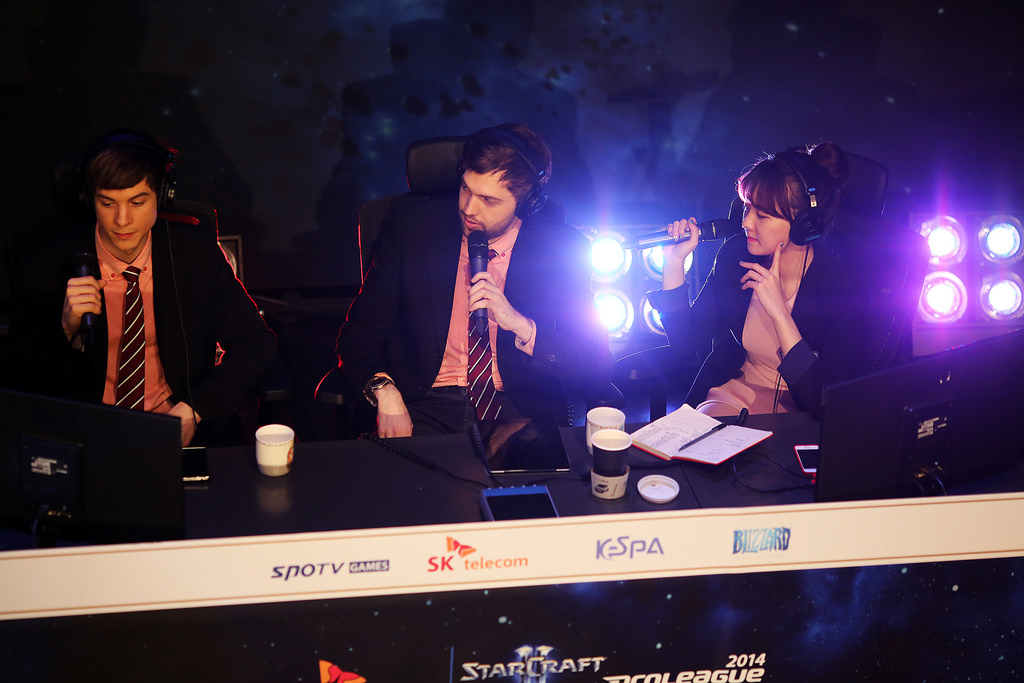
StarCraft Proleague, more commonly known as simply "Proleague", was my first venture outside of the GSL. I was given the opportunity to shape the commentary team and eventually ended up working with ex-pro Andrew "mOOnGLaDe" Pender and Brendan Valdes. Brendan Valdes had commentated StarCraft II but I recommended him for the role because of his natural ability to read games incredibly well as well as his experience being highly ranked in many online games at the time.
Both Brendan Valdes and mOOnGLaDe did not have commentary backgrounds but were natural fits on Proleague, alongside Korean to English live interpreter Sojung Lim, who would occasionally guest appear in commentary as well. Because our outfit coordinators often dressed us in pink button up shirts, we coined our broadcast team name "Team Salmon".
Proleague was a challenging time, but one of the most memorable in my career. It is the tournament I miss commentating the most.
overwatch-apex-2017.jpg
Overwatch APEX
2017 • APEX Lead Commentator
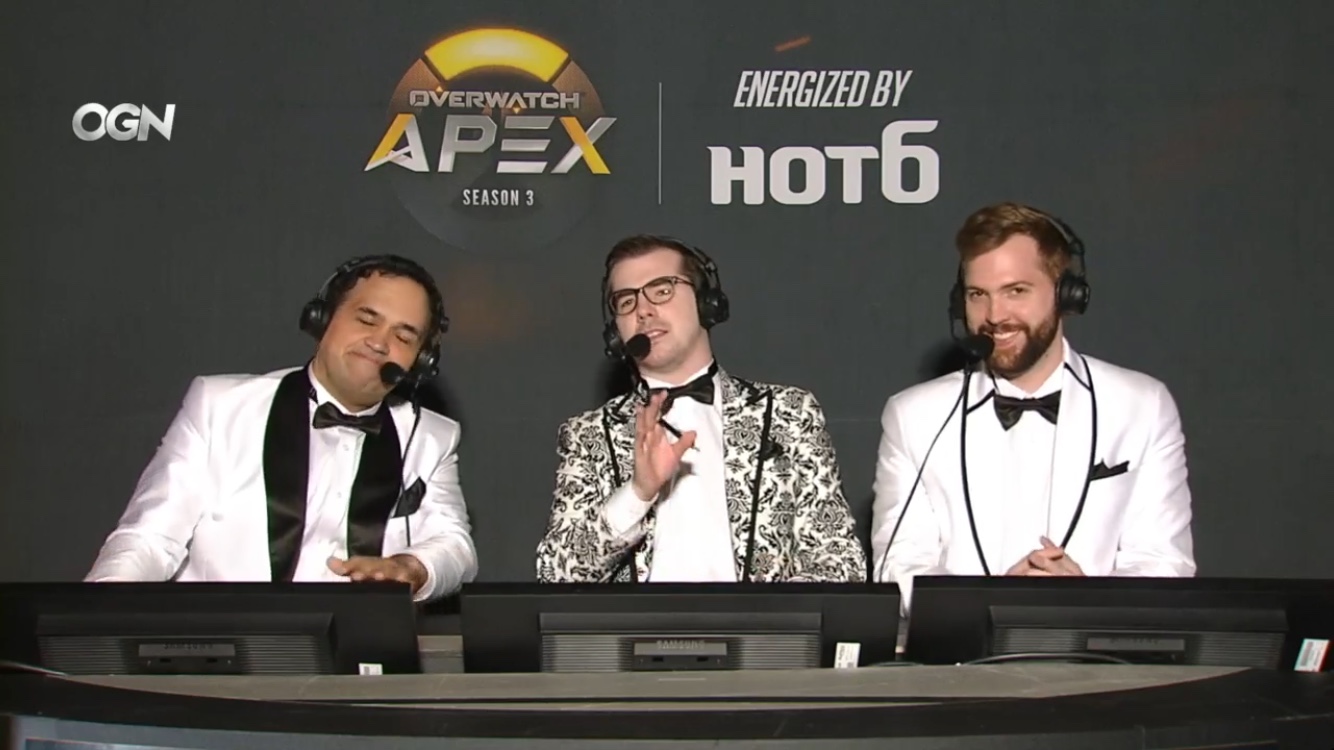
When you look at the history of Overwatch esports, APEX is widely considered to be the true beginning. It's still hard for me to fathom this tournament only ran for about a year. I spent months studying and preparing to get the gig, and after Christopher "MonteCristo" Mykles and Erik "DoA" Lonnquist left Korea to work on consulting for the Overwatch League, I was given the opportunity to commentate the game thanks to a strong recommendation from Chris "PapaSmithy" Smith.
We worked together, alongside new-to-Korea Max "Atlus" Anderson and Seth "Achilios" King. PapaSmithy and Atlus dropped out of the game entirely, favoring focusing on their League of Legends commentary of the LCK. This left me and play-by-play Achilios as the default duo, making me the lead analyst for the fourth and final season of APEX.
APEX was dissolved following the launch of Overwatch League and the creation of Overwatch Contenders, but in my mind, no tournament came anywhere close to the production value OGN brought to this tournament. The scale of the tournament, its foreign invite teams, and massive grand finals venues attracted massive attention. The music was probably the most iconic part of the tournament to most, with the intro into in-game music ending with the line "I get it". Fans of this tournament will often just write "I get it" in message boards or online chat if the tournament is mentioned.
overwatch-league-2019.jpg
Overwatch League
2019-2020 • OWL Commentator
The Overwatch League was a very special tournament for me. It was the first time I ever left Korea to work on a regular league—the Overwatch League was run initially offline in Burbank, California. Even so, with about 60% of the League's professional players being from South Korea, I felt right at home. It was the biggest and most expensive production I've ever been a part of. I continued commentary exclusively with Seth "Achilios" King after APEX ended. We did a year of Overwatch Contenders, the second tier league, before being moved into Overwatch League itself.
OWL, as it was often called, was a very controversial tournament in the esports space because of its massive investment from team owners who commanded more capital than the space had ever seen before—big players like Robert Kraft were involved. Fans and esports pundits alike worried that if the Overwatch League failed, it would leave a ripple effect that could hurt the entirety of esports and its existing business models. While that remains to be seen, it did ultimately shut its doors in 2024. Its ambitious plan of becoming a global league with road shows in Korea, China, across the US, and even Europe, was halted due to the COVID19 pandemic.
As such, it moved to an online tournament starting in 2020. Overwatch League and Blizzard revolutionized home broadcast setups by sending commentators like myself several pelican cases worth of standardized equipment, backdrops, and more. There was even a feature which allowed you to place a portable monitor to your left and right and see your co-commentator as if they were right next to you. This league was experimental in so many ways, and paved the way for esports franchising as we know it today.
With uncertainty about the future of the league after it was suddenly put online in 2020, and about whether or not I'd be able to return home to Korea, I ultimately decided to move back to Korea and finish the online season there instead of in my apartment in LA. After being given an opportunity to work on LCK domestically, I changed gears and left Overwatch behind. I later worked on OWCS briefly, as well as Esports World Cup for Overwatch. Overwatch remains one of the games that shaped my career, and I still see it as a broadcast chapter worth returning to when the right opportunity appears.
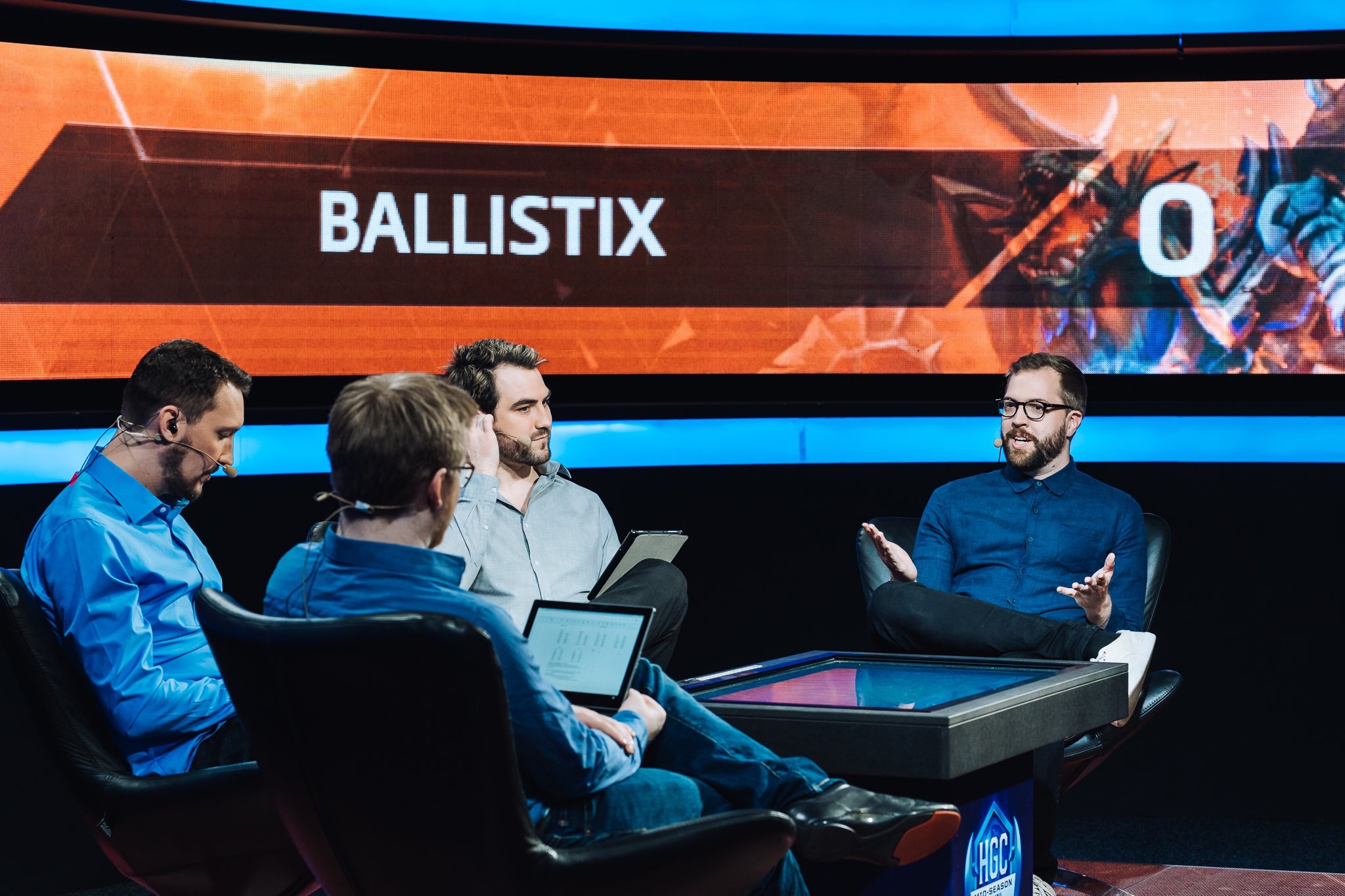
hgc-global-analyst-desk.jpg
HGC
2016-2018 • HGC Commentator and Analyst
Heroes of the Storm was a relatively niche title in the realm of esports, and as such, HGC was something of a cult classic tournament. It had regular viewers who watched every game and were extremely passionate. From an outsider’s perspective, it might have seemed like HGC players and casters were struggling because the game seemed unstable viewership-wise and its popularity was declining. As someone who worked on this project, this couldn’t have been further from the truth. HGC felt like being part of a family.
After doing OGN’s Super League in 2015 and Heroes of the Storm’s first official international tournament in Korea with Dan “Artosis” Stemkoski, the tournament was renewed for three seasons of Super League at OGN in 2016. OGN had just opened its brand-new studio in the S-Plex Center in Sangam, and it was very exciting to have Heroes of the Storm be part of it. This studio became iconic for LCK, APEX, and later Valorant’s VCT Pacific League after the dissolution of OGN.
This was a period of uncertainty because viewership and the player base for the game were not reaching expected levels. The crowds were small, rarely filling the arena. But the Korean players were very quickly becoming the best in the world. Suddenly, global interest in Korean Heroes of the Storm, or HotS, was rising. As a result, for the first time in my career, I was invited to commentate and be a regional expert overseas for the international tournaments that year. I was thrilled to be considered a Korean esports expert, and I was also the most veteran broadcast talent for these events. I helped shape the narrative around the Korean teams that were dominating the fan-favorite Western squads, and as a team, we were able to overcome the “faceless Koreans” feeling that often prevailed at the time, especially after Korean players had dominated StarCraft 2 for years prior as well.
In 2017, HGC was scaled back in Korea to become an offline tournament with no audience. The players competed in an arena, but there was no audience to see them live. They essentially played in a closed studio. This was disappointing to most, but an inevitability considering the state of HotS’ popularity. Despite that, with the move to the league format that year, Blizzard was able to give stipends to the teams involved and help provide a semblance of sustainability. Artosis left HGC commentary during this time as well and was replaced by Daniel “GClef” Na for English commentary of the Korean regional league. Korean teams continued to dominate international competition, and I was still traveling alongside them.
2018 continued in much the same way, with some Western teams starting to compete with Korea. The gap between regions was shrinking. There was some renewed interest in the international competition because Europe was performing very well.
One night, a few weeks after the HGC Finals at BlizzCon, everyone in the entire HGC scene received an email. In summary, HGC would not continue into 2019 and had been completely canceled. In an instant, everyone involved in the project lost everything. Players were suddenly without direction: teams disbanded, sponsors left. HGC commentators who worked almost exclusively on HGC were suddenly jobless. So many of the people I worked with and traveled the world with would have to move on from this thing we poured our souls into for nearly half a decade. Some of them I would never see again.
I will never forget HGC. It may not have been the biggest esport I worked on, but it might have been the one with the most heart.
lck-finals-2025.jpg
LCK
2021~ • LCK Commentator and Analyst
I began work on the LCK in 2021. This story is still unfolding.